For a lot of people, the gap between wanting filler and actually booking it is filled with anxiety about the unknown. Not anxiety about the result. Not even anxiety about the needle. Anxiety about what the whole experience looks like, what you are expected to say and do, whether you will feel pressured into something, whether you will feel foolish asking basic questions, whether the consultation will feel clinical and intimidating or whether you will be listened to.
These are real concerns, and they are worth addressing directly rather than being dismissed as irrational. Going into a medical appointment involving your face for the first time without knowing what to expect is a genuinely unfamiliar experience, and the uncertainty that comes with it is understandable.
This article explains exactly what happens from the moment you book through to the moment you leave after your first filler appointment. Not in general terms. Specifically and practically, so that by the time you arrive at the clinic, the process itself is not something you are managing in addition to everything else.
Before You Arrive: What to Do and Not Do
A first filler appointment has a small number of practical preparation steps that make the experience easier and the result better.
Avoid alcohol for at least 24 hours before your appointment and ideally 48 hours. Alcohol thins the blood and increases the likelihood of bruising after any injectable treatment. This is not a rigid rule that ends the appointment if you had a glass of wine last night. It is sensible preparation that reduces the chance of more visible bruising in the days after treatment.
Avoid aspirin, ibuprofen, and other non-steroidal anti-inflammatory medications for several days before your appointment unless they have been prescribed for you by a doctor and stopping them is not appropriate. These medications also affect blood clotting and increase bruising risk. Paracetamol is fine.
Avoid taking fish oil, vitamin E, or high-dose vitamin supplements in the days leading up to your appointment. These can similarly affect how easily the skin bruises.
Come to your appointment without heavy makeup on the treatment area if possible. Not because makeup cannot be removed at the clinic but because arriving with clean skin makes the assessment process easier and the preparation quicker.
Do not come to your appointment with a rigid idea of exactly how much filler you want and exactly where you want it placed. It is fine to have a clear sense of your goals and to communicate them, which you absolutely should do. But the specific clinical plan for how to achieve those goals is something you arrive at together with the practitioner during the consultation, not something that is decided before the assessment takes place.
The Consultation: What Actually Happens
The consultation is the most important part of the entire appointment and the part that most first-time patients underestimate. It is not a brief preamble before the real business of injecting begins. It is the clinical foundation on which safe, appropriate treatment is built.
When you sit down for your consultation, the practitioner will begin by asking about your medical history. This is a genuine clinical review, not a formality. You will be asked about current medications including blood thinners, steroids, and immunosuppressants. You will be asked about allergies, specifically to any injectable products or local anaesthetic agents if these are being used. You will be asked whether you have had any previous aesthetic treatment and if so what, where, and how your skin responded.
You will be asked whether you have any history of cold sores, which is clinically relevant for lip filler specifically because the trauma of injection in the lip area can reactivate the herpes simplex virus in patients who are susceptible. Knowing this before treatment means the appropriate prophylactic antiviral can be prescribed if needed.
You will be asked about skin conditions, autoimmune conditions, clotting disorders, and any other relevant medical history. If you are pregnant or breastfeeding, filler is contraindicated, and the appointment will not proceed to treatment.
After the medical history, the practitioner will assess your face. This is done by looking at you in normal conversation, asking you to make specific expressions, examining the skin and soft tissue in the proposed treatment areas, and assessing the anatomy specific to what you are hoping to address. For lip filler, this includes looking at the natural shape and proportion of your lips, the relationship between your upper and lower lip, and the surrounding anatomy. For cheek or jawline work, it includes looking at the whole face in proportion rather than just the requested area.
This assessment is what produces the specific clinical recommendation. A practitioner who skips it and agrees to whatever was requested before looking at your face is not conducting a proper consultation. The assessment is what determines whether the treatment you had in mind is appropriate, whether a different approach might produce a better result, and what volume and placement would be both safe and suited to your specific anatomy.
The Informed Consent Process
After the medical history and assessment, you will go through informed consent. This is a genuine process rather than a signature on a form, though the form is also part of it.
Informed consent means that by the time you agree to proceed, you have genuinely understood several things. You know what the specific product being used is and what it does in the tissue. You know what the realistic range of outcomes for your specific treatment is. You know what the recovery period looks like and what is normal to experience in the first days after treatment. You know what the risks and potential complications are and how they are managed if they occur. You know that hyaluronidase is available to dissolve HA filler if needed.
A practitioner who rushes through this or treats it as a box-ticking exercise is not giving you what you need to make an informed treatment decision. Take your time with it. Ask anything you want to ask. No question is too basic, and no concern is too minor to raise at this stage.
You may also be asked to consent to photographs being taken before and after treatment. Clinical photographs are the standard of practice for documenting results and are useful for your own reference as well as for the practitioner's records. You can ask about the photo policy, who has access to the images, and whether they may be used for any purpose beyond your clinical record.
The Treatment Itself: What It Feels Like
After the consultation and consent are complete, treatment begins. What this looks like depends on the specific area being treated, but the sequence is broadly consistent.
The skin in the treatment area is cleaned. For lip filler, a topical numbing cream is applied to the lip area and left for fifteen to twenty minutes before injection begins. The numbing cream does not eliminate all sensation, but it significantly reduces the discomfort of the injections, which most patients describe as a mild stinging or pressure rather than sharp pain.
The filler is injected using either a fine needle or a cannula depending on the area being treated and the practitioner's clinical preference. A needle is placed directly at multiple specific points. A cannula is a blunt-tipped tube that is inserted through a single small entry point and manoeuvred through the tissue to place filler along a broader area. Both are used in filler practice, and each has clinical advantages for specific applications.
The injections themselves are brief. The entire injection process for a lip filler treatment typically takes five to fifteen minutes. Cheek or jawline treatment may take slightly longer depending on the number of areas and the volume being placed.
During the injections, you may feel pressure, a brief stinging sensation at each injection point, and sometimes a spreading sensation as the filler is placed. None of these are severe for most patients, and most describe the experience as more manageable than they expected.
After injection, the practitioner will massage the area gently to ensure even distribution of the product and then assess the result, compare it to your pre-treatment photographs, and discuss what has been placed and what to expect in the days ahead.
Immediately After Treatment: What You See and What Is Normal
This is the stage that surprises most first-time patients because what you see in the first hours after filler does not look like your settled result. Understanding this before you look in the mirror is important.
Swelling is normal. For lip filler especially, the lips swell immediately after treatment and will continue to swell for the first twenty-four to forty-eight hours. The amount of swelling varies significantly between patients. Some people swell very little. Others find the initial swelling quite significant. In both cases, the swelling is temporary and does not reflect the result you will be living with.
Bruising is possible at any injection point and is more likely in patients who bruise easily, who did not avoid the blood-thinning foods and medications mentioned earlier, or who had treatment in areas with a more extensive superficial blood supply. Bruising can take seven to ten days to fully resolve and can be covered with makeup from the day after treatment in most cases.
Asymmetry in the first few days is almost always a result of uneven swelling rather than uneven placement. The face does not swell symmetrically, and an uneven appearance immediately after filler is not a reliable indicator of how the settled result will look.
Lumps or firmness at injection points are normal in the first days and typically resolve as the filler settles and integrates into the surrounding tissue.
The settled result, which is what you will actually be living with, is best assessed at around two weeks after treatment. This is the point at which swelling has fully resolved, any bruising has cleared, and the filler has softened and integrated into the tissue. This is also the appropriate time to contact your practitioner if you have any genuine concern about the result that has not resolved naturally.
Your Review Appointment
Most filler treatments include a review appointment at two weeks. This is not just a check-in to confirm you are happy. It is a genuine clinical assessment of the settled result.
At the review, the practitioner compares your current appearance to your pre-treatment photographs and assesses whether the result has achieved the clinical goals agreed at consultation. If a very minor adjustment is needed, this can often be addressed at the review. If you have a concern about the result that you have been monitoring since treatment, the review is the appropriate time to raise it properly rather than at two days when it is too early to make a reliable assessment.
Coming to your review appointment even when you are happy with the result is worthwhile because it gives the practitioner an accurate picture of how your skin and tissue respond to treatment. This information is genuinely useful for planning any future treatment and for calibrating the approach if you return for maintenance.
What Happens When Filler Wears Off
Hyaluronic acid filler is not permanent. It is gradually metabolised by the body over months. The timeline varies significantly between patients and between treatment areas but most facial filler lasts somewhere between six and eighteen months before a noticeable fading of the result occurs.
The return of your face to its pre-treatment state is gradual rather than sudden. You will not wake up one day to find the filler has gone. The result softens progressively over weeks as the HA is absorbed. When the result has faded to a point where you feel you would like to maintain or refresh it, booking a maintenance appointment is appropriate.
Some patients choose to have a maintenance appointment before the result has fully faded, which means they are always maintaining a consistent appearance rather than cycling between the result looking at its best and then fading significantly before the next treatment. Others prefer to let the result fade more fully before repeating. Both approaches are valid, and the right one depends on your own preferences and how you relate to your appearance across the treatment cycle.
Frequently Asked Questions
Will the practitioner tell me if filler is not the right treatment for my concern?
A good practitioner will. If the assessment reveals that what you are hoping to address is better served by a different treatment or a different approach, that is what the consultation is for. Patients who feel their concerns were genuinely assessed and responded to honestly are consistently more satisfied with their experience than those who received exactly what they requested without clinical assessment.
Can I change my mind about having treatment at the consultation?
Yes, at any point before treatment begins. A consultation does not commit you to proceeding. If anything during the consultation raises a question you need more time to think about, or if you simply feel it is not the right time, you can leave and return when you are ready.
Will I be able to go back to work the same day?
In most cases, yes. The treatment itself takes less than an hour for most common filler appointments. Redness and swelling at injection points may be visible for a few hours after treatment. For most people, normal daily activities, including work, are manageable the same day, with the caveat that visible bruising in the first week is possible and worth considering if your work involves being on camera or in front of clients.
What if I do not like the result?
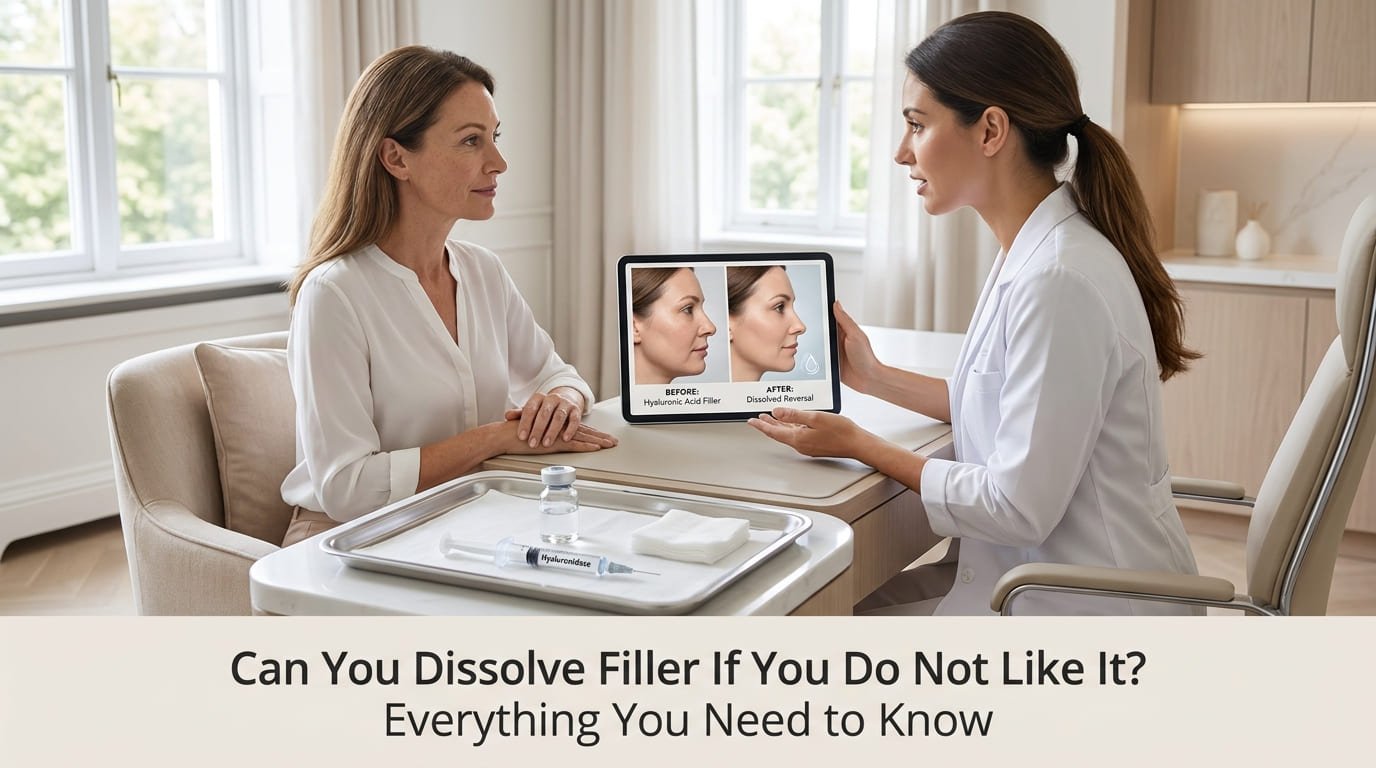
Hyaluronic acid filler can be dissolved using hyaluronidase. This is available at Angel White and is one of the primary reasons HA filler is the standard of care for most facial applications. If after the two-week settling period you are genuinely unhappy with the result, raising this at your review appointment is the first step toward addressing it.
How much does filler cost for a first-time patient?
Pricing varies by area and volume. A consultation is the appropriate point at which a clear cost is confirmed for the specific treatment plan agreed during the assessment. The clinic team can also provide an approximate cost range for the area you are interested in before you book, so you arrive at the consultation with a realistic expectation of the investment involved.
What is the minimum age for filler treatment?
Injectable aesthetic treatments, including dermal filler, are available to patients who are 18 years of age or over.
If you are ready to book a consultation for your first filler appointment or want to ask a question before you commit to booking, get in touch with the Angel White team at our Littlehampton or Hove clinic.
Book a Consultation in Littlehampton or Book a Consultation in Hove